Their Only Crime Was Being Wild
Words and photographs by Charuka Abhayawickrama
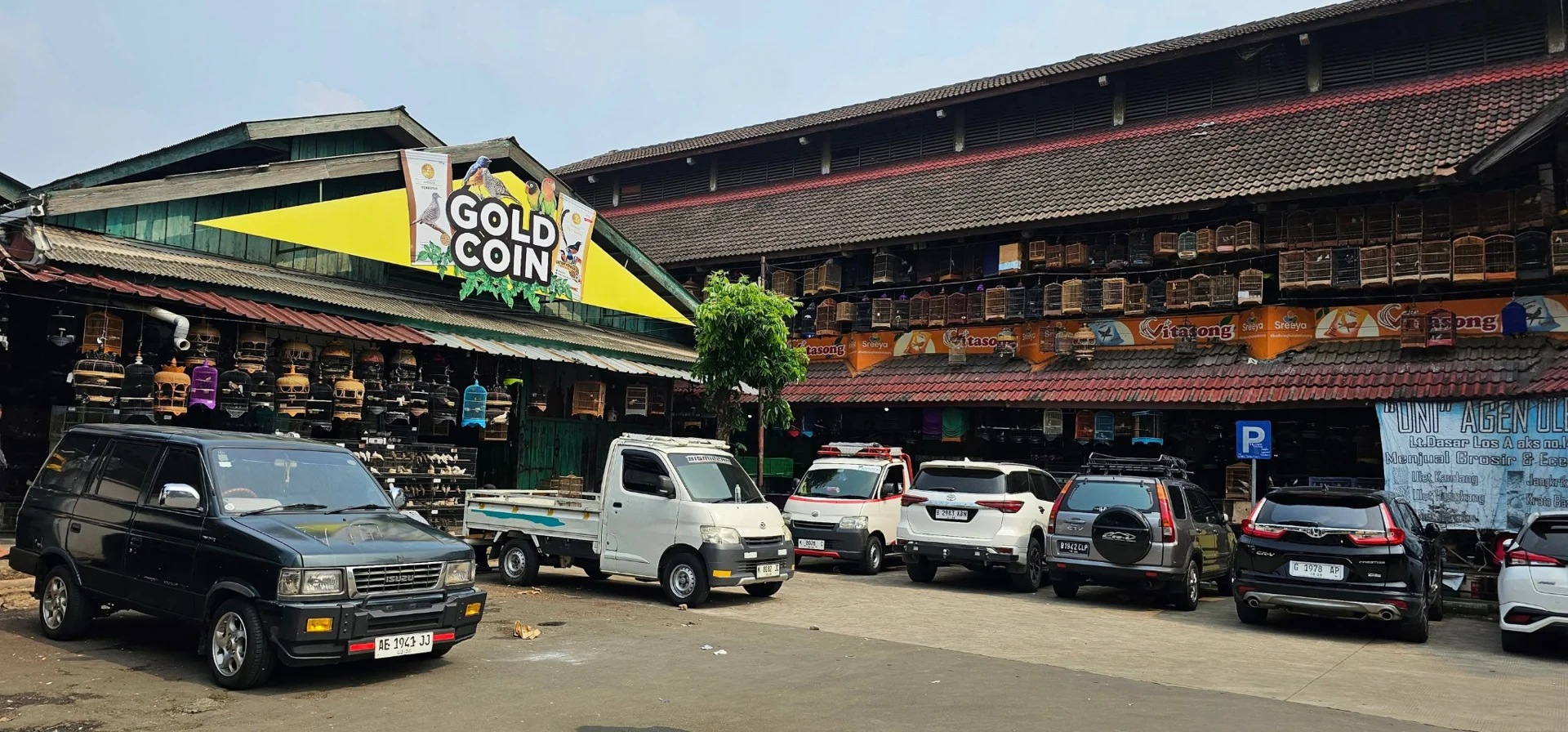
Inside Pramuka Bird Market in Jakarta
I have photographed birds around the world, usually in forests, wetlands and mountains, where every encounter comes on the bird’s terms. Sometimes I wait for hours. Sometimes I walk for days. Sometimes the bird never appears.
That freedom is part of what makes an encounter meaningful. The bird can choose to stay, disappear into the canopy or fly beyond the reach of my camera.
At Pramuka Bird Market in Jakarta, the birds had no such choice.
Walking past cage after cage, I kept asking myself the same question: what was their crime?
Was it their beauty? Their song? The colour of their feathers? Or was their only mistake being born wild in a world where people decided that something beautiful could be captured and owned?
I had visited this market before. Returning did not make it easier.
 |
 |
|---|---|
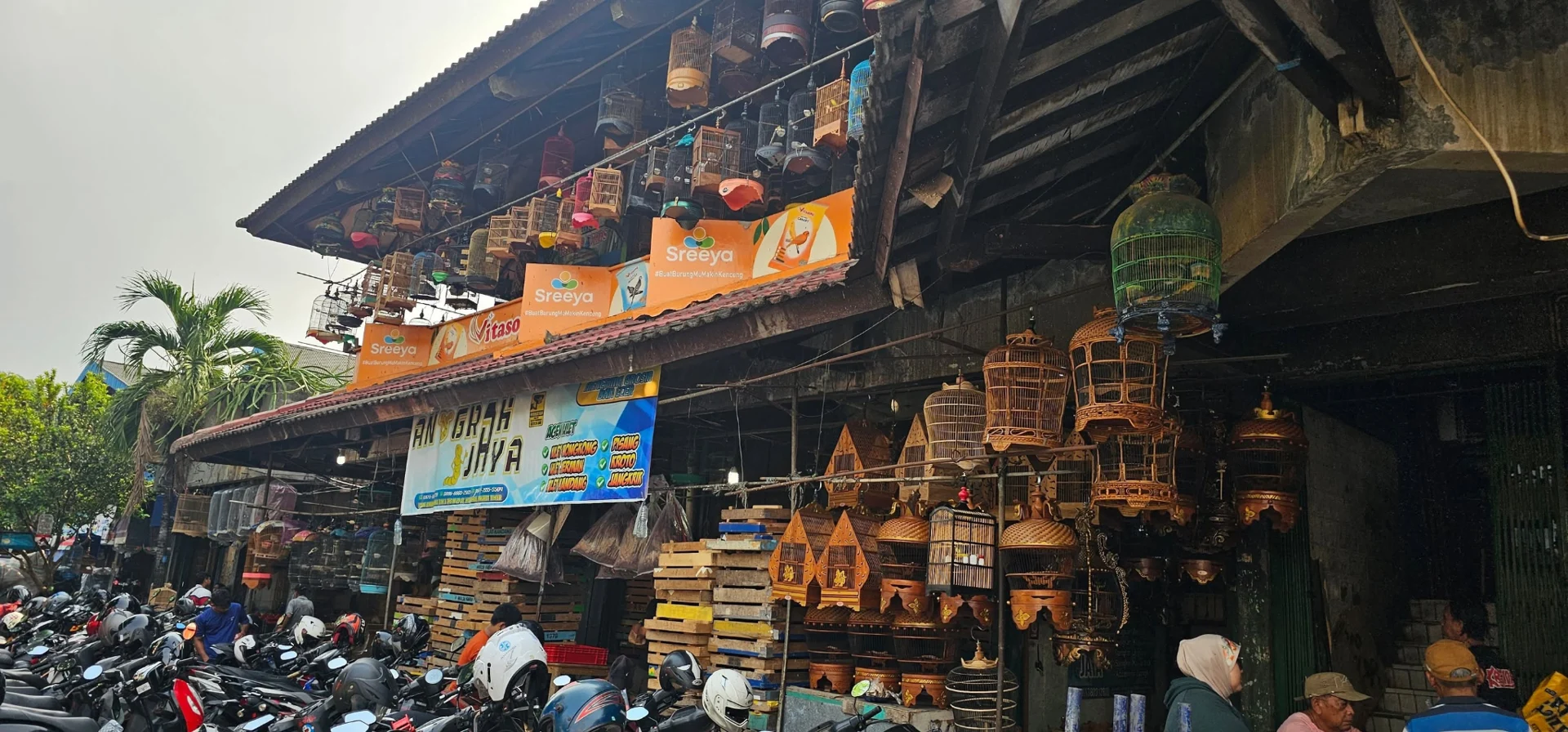
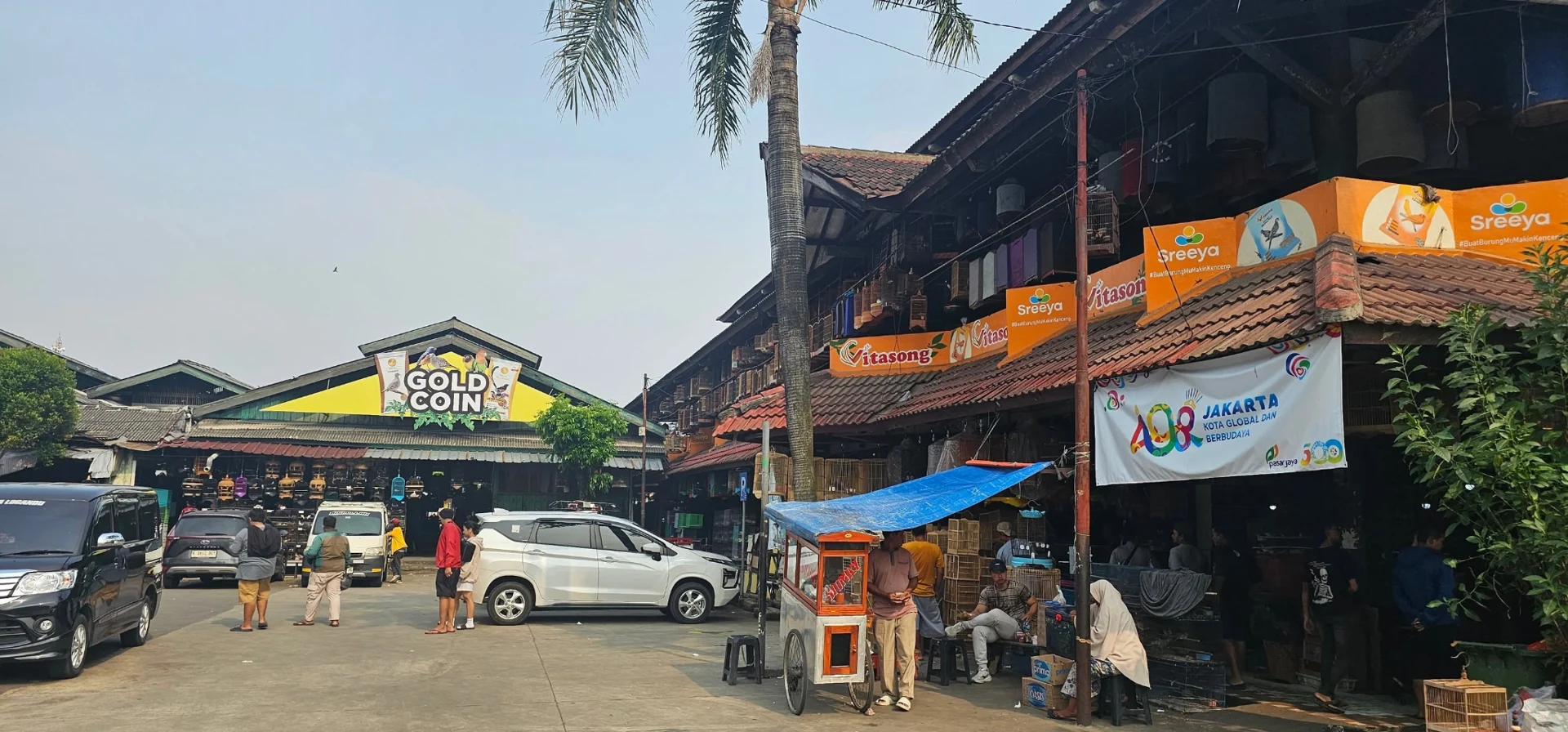
| Cages line the shopfronts and hang above the pavement. | The trade takes place amid the ordinary activity of the city. |
Wild birds behind bars
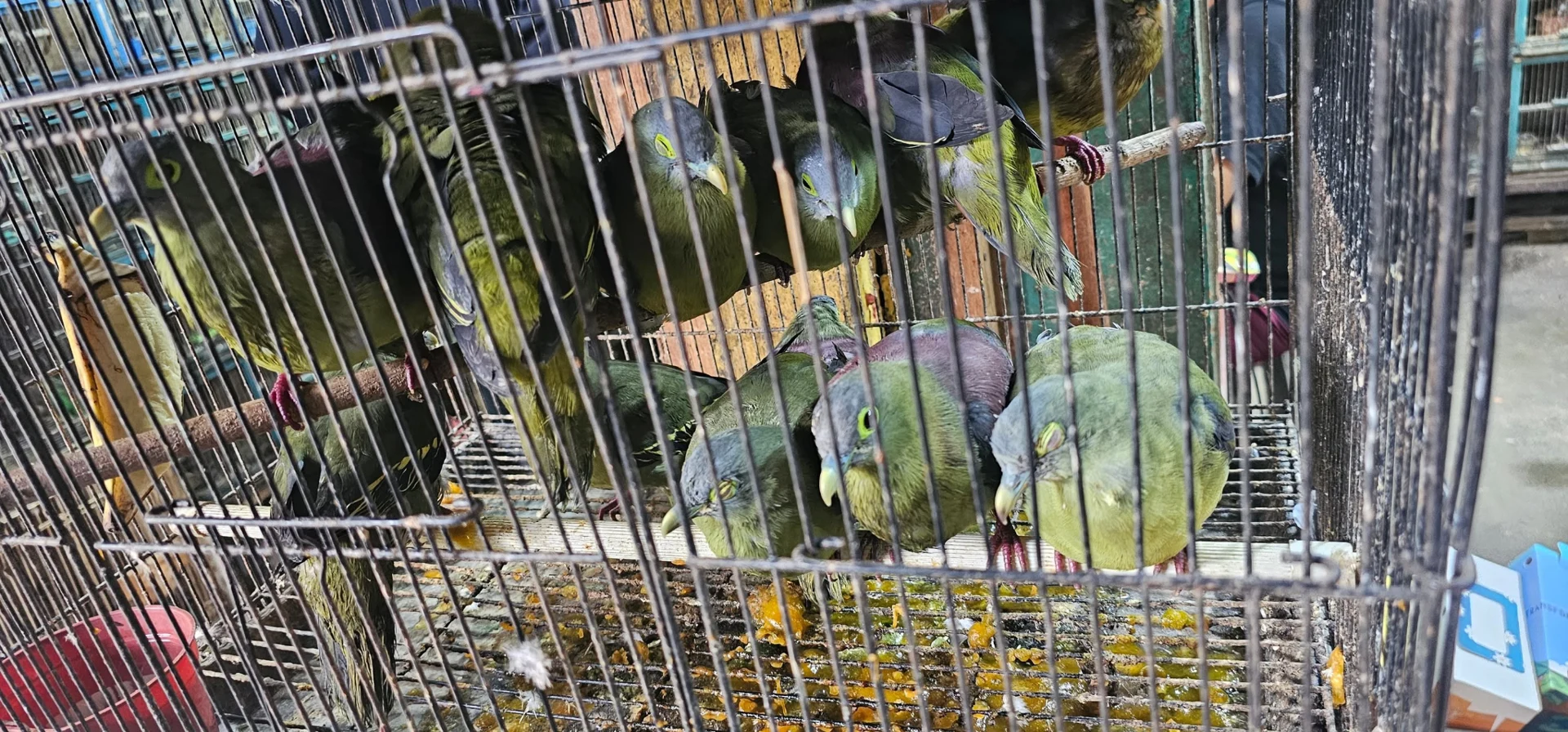
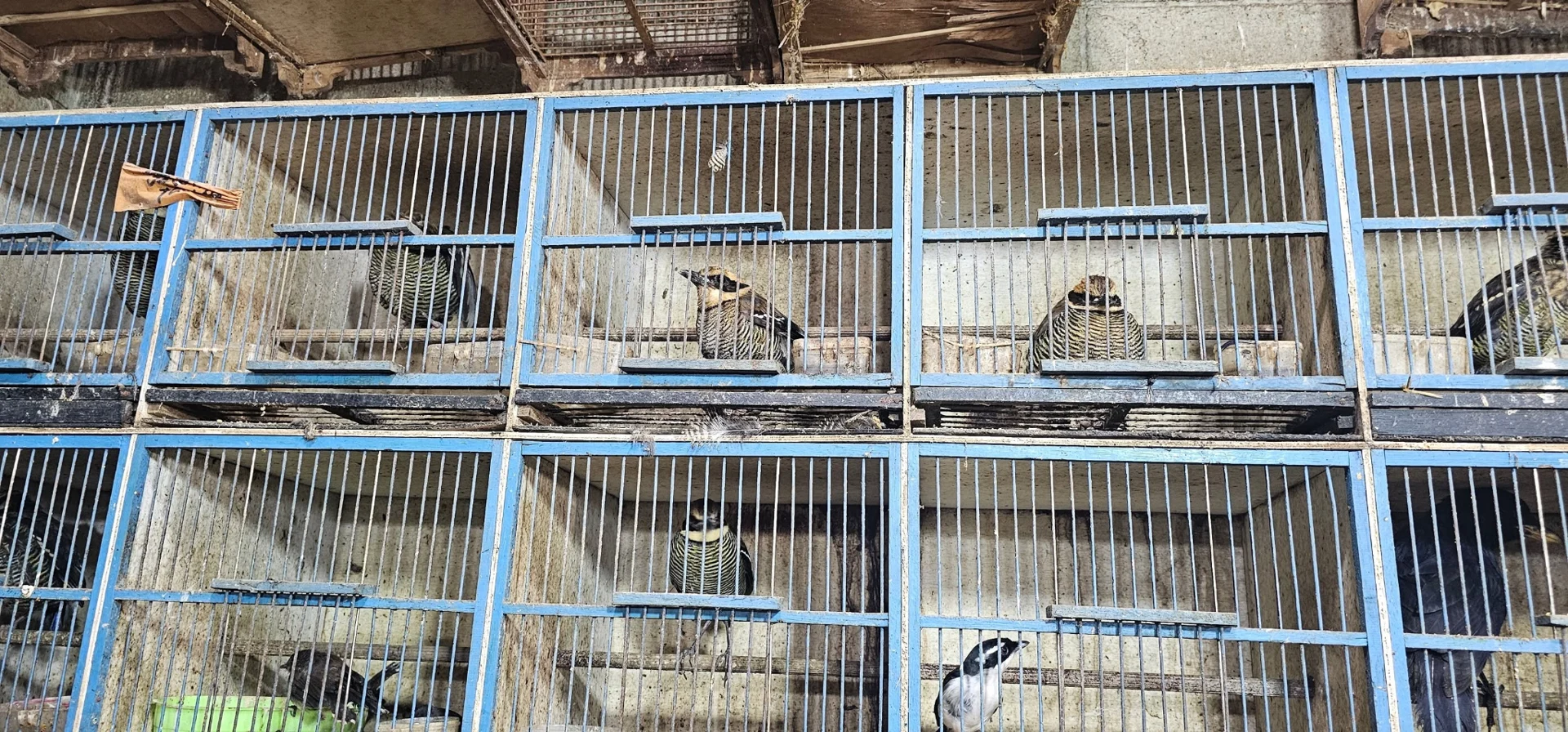
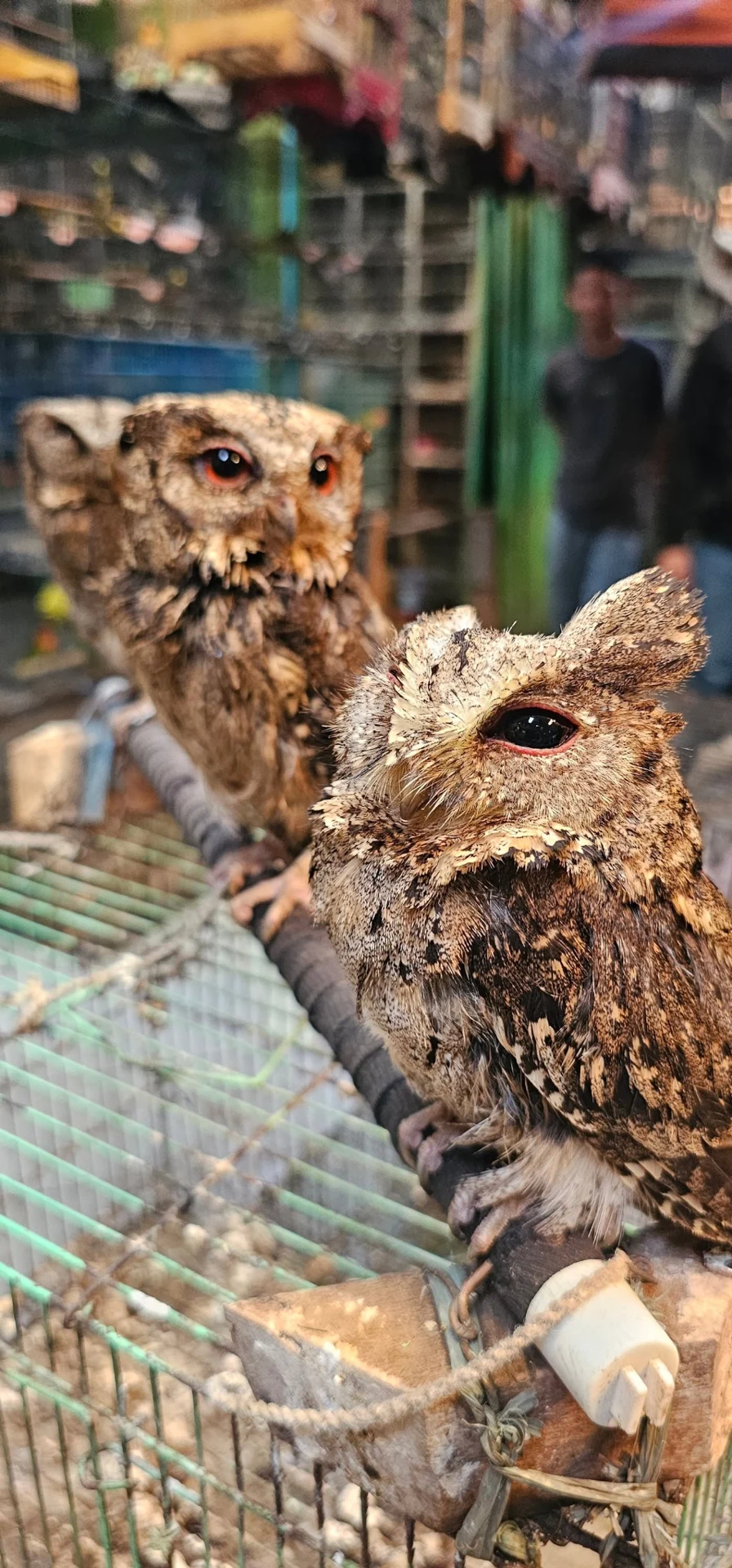
There were birds whose families I have searched for in remote forests: pittas, laughingthrushes, leafbirds, fruit doves, parrots and owls. Seeing birds in a market carries none of the joy of finding them in the wild. Here, the search ends at a set of bars.
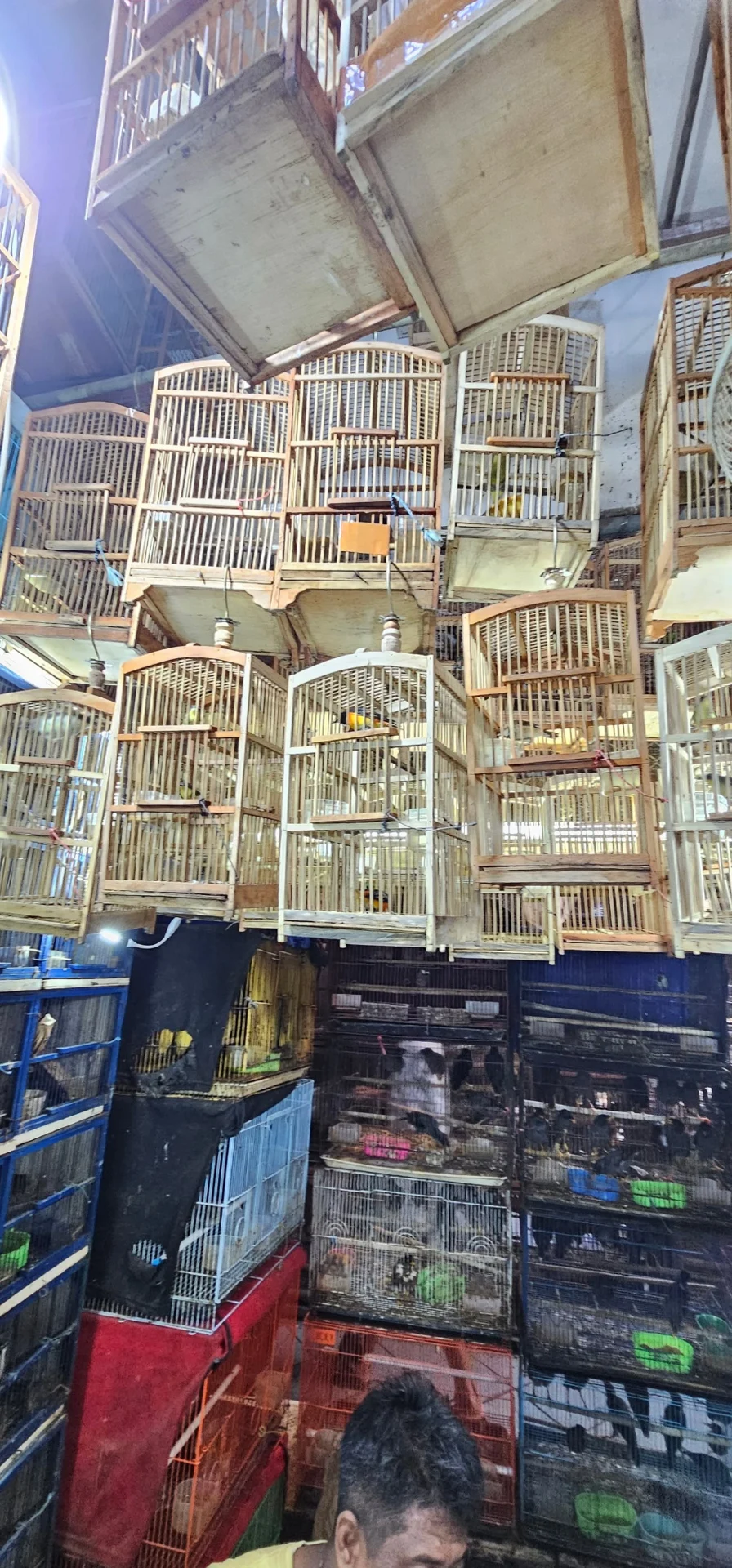
Some birds were crowded together. Others sat alone in small compartments. Cages hung above cages, filling the space where branches and leaves should have been.
Looking at them, I found myself thinking less about what I could see and more about everything that was missing.
A flock. A mate. A territory. The shelter of a tree. The freedom to move away.
Every species has its own way of living. A forest floor bird searches through leaf litter. A canopy bird moves among branches high above the ground. A flocking bird lives within a world of calls, movements and relationships with others of its kind.
Those differences matter. A cage, a perch and a feeding dish cannot stand in for all of them.
Some birds I saw were offered for as little as US$10. On an earlier visit, I had encountered prices around US$15. I struggled with the thought that a living creature could be taken from a world of possibilities and given a price worth less than a meal.
But a higher price would not have made the sight easier. What troubled me was that a life had become something to buy.
 |
 |
|---|---|
| Lives crowded behind wire. A photograph records the confinement, but cannot tell us each bird’s history. | Separate compartments, each containing a life with its own needs. |
A woodpecker with no tree
One bird stays with me more than almost anything else I witnessed.
A woodpecker was inside a small cage with a cardboard box. It kept pecking at the cardboard, again and again.
There was no tree trunk. No bark to investigate. No dead timber concealing insects. Just cardboard within reach of its bill.
I stood watching a familiar behaviour in a setting that made it painfully unfamiliar. In a forest, I would have been delighted to observe a woodpecker at work. Here, I could only think about the world that should have surrounded it.
We can give a bird food and water. We can keep its heart beating.
Keeping something alive is not the same as allowing it to live.
How do you give a flock bird its flock back? How do you replace the forest floor beneath a pitta, or the canopy through which a fruit dove should be moving? How do you put a lifetime of choices inside a cage?
These were the questions I carried through the market.
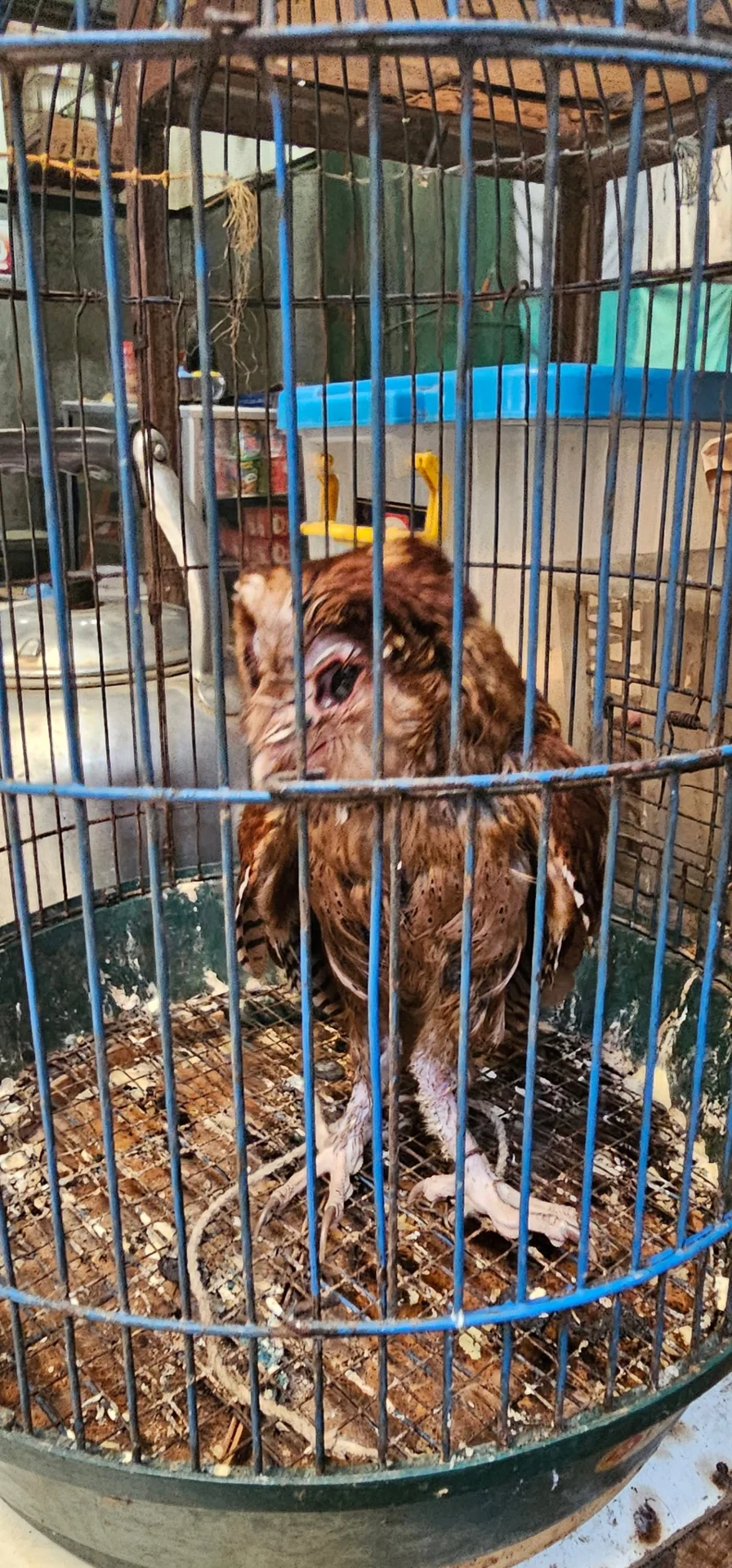
I could not know the history of every bird I photographed. I could not establish from a glance where each one had come from, how it had reached the market or what would happen to it next. Yet that uncertainty made the experience more troubling. The bird in front of my camera was only the part of the story I could see.
What had happened before it arrived? What had happened to the others?
Jakarta’s bird trade: warnings documented for years
The concerns surrounding these markets have been documented for years. In a report published in 2015, TRAFFIC recorded more than 19,000 birds of 206 species across Jakarta’s Pramuka, Jatinegara and Barito markets during a three-day survey. The organisation reported widespread illegal trade and called for stronger enforcement and measures to reduce demand. Those are historical findings, rather than a count of what I saw on my visits, but they show how long the warning has been there.
Standing among the cages, I wondered how many more visits, photographs and reports it would take before those warnings brought lasting change.
 |
 |
 |
|---|---|---|
| An encounter with owls in a setting far removed from their natural habitat. | Behind the bars, a bird whose history and future I could not know. | Cage above cage: the scale of confinement inside the market. |
Protecting wild birds starts with valuing their freedom
I also know that this question reaches far beyond Jakarta. Wherever people want to possess wild animals, we need to examine what that desire asks of the animal.
For me, loving birds means wanting them to have somewhere to live freely. It means protecting the places where they feed, breed and raise their young. It means accepting that their lives do not exist for our convenience.
There are ways to turn that love into something useful. We can choose to watch and photograph birds in the wild. We can support local guides and communities whose livelihoods depend on healthy habitats. We can support conservation, responsible rescue and efforts to stop illegal capture and trade.
We can also question the demand that keeps wild birds moving from forests into cages. Admiring a bird should give us a reason to protect its freedom.
As I walked through Pramuka, I found myself looking into the birds’ eyes rather than admiring their colours.
When people look at these photographs, I hope they pause before saying, “What a beautiful bird.”
I hope they ask what kind of life that bird should be living.
Photography is usually how I celebrate wildlife. At Pramuka, my camera had another purpose: to bear witness to something I found difficult to watch and impossible to forget.
The beauty was still there. So were the bars.
I walked out of the market.
They could not.
Photographs © Charuka Abhayawickrama. Explore more wildlife photography, browse the photography gallery, or read more from the Journal.
Share this article
A PRIVATE CONVERSATION
Share your thoughts
Have a question or a perspective to share? Send me a private message about this article. Your message and contact details will not be published.